Press Kit
Anthony Bottalico is the author of TRAINMAN, a firsthand account of his decade as union General Chairman taking on entrenched corruption inside the labor movement and helping found ACRE, the independent union of Metro-North conductors and engineers. He spent forty years on the railroad, negotiated a 1995 contract that prevented a strike that would have stripped his members of federal protections, and built a union culture that still holds today. He is available for podcast interviews, speaking engagements, and media inquiries.
Use the topics below to start a conversation.
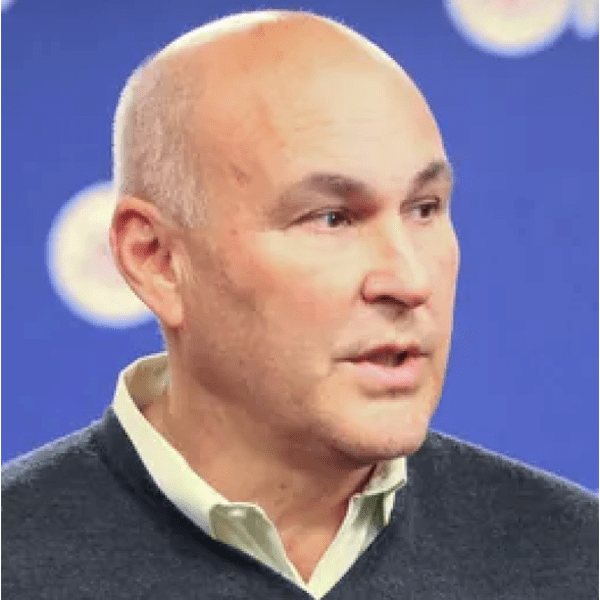
Below are topics Anthony is available to discuss in interviews. Each comes with suggested questions to make it easy to start a conversation.
1. The 1995 strike that almost was
In the spring of 1995, every rail union in the New York region was hours from a coordinated strike. The buses were already paid for. The Governor's office had a plan in place. What nobody outside the room knew was that Bottalico and a handful of other union leaders were sitting in a meeting trying to talk everyone out of it, because the strike would have triggered a law that converted their members into state employees with no right to strike, ever. The story of how they pulled it back, and what they won by doing it, is one of the most consequential moments in modern labor history that almost no one knows about.
Suggested questions:
- What was actually at stake if the strike had gone forward?
- How did you convince other union leaders to stand down when they wanted to walk out?
- What did the day after look like? When did you know it had worked?
- How is that moment different from the labor flashpoints we see today?
2. Fighting corruption from inside the union
When Bottalico was first elected General Chairman, the international president of his union flew him to Cleveland and sat him down in front of the executive board. The message, delivered carefully, was that some past issues with the union's finances were better left in the past. Bottalico recognized the line for what it was. The FBI got involved within months. The story of what he found, what he refused to do, and what it cost him is the moral backbone of TRAINMAN.
Suggested questions:
- What did the international actually want you to do?
- How did you decide to refuse, knowing the cost?
- What did it look like to negotiate union contracts while the FBI was investigating your own organization?
- What do you tell people who suspect corruption inside their own institutions today?
3. What holds people together when it gets hard
In labor history, conductors and engineers don't get along. They are separate crafts, separate cultures, and historically separate unions, frequently fighting each other for the same gains. Bottalico helped form ACRE, the independent union that brought them under one roof. The reason it worked, he says, wasn't strategy. It was friendship. His close working relationship with Mike Doyle, who represented the engineers, became the public proof that the two sides could share a room. The story of that friendship, what it cost both men, and the culture they built together is the human story underneath the labor history.
Suggested questions:
- What were the existing tensions between conductors and engineers that ACRE had to overcome?
- How did your friendship with Mike Doyle actually change the dynamic on the ground?
- What does loyalty mean inside a working culture like that?
- Why has the culture survived after you stepped back?
4. The cost of staying silent
At a recent book club, a woman approached Bottalico and told him that TRAINMAN had made her think about every moment in her own life when she knew something was wrong and chose to say nothing. She wasn't a union member. She wasn't a railroad worker. She was an ordinary person who recognized herself in his story. That conversation, Bottalico says, is what the book is actually about. Not corruption. Not labor history. The cost of remaining seated.
Suggested questions:
- Why do you think most people stay silent when they see something wrong?
- What's the difference between knowing something is wrong and being willing to act on it?
- What did it cost you, personally, to act?
- What do you say to someone who wants to act but feels outmatched?
5. The Bronx kid who turned down basketball for love
Bottalico's father was so afraid of the heroin epidemic in 1960s New York that he put his twelve-year-old son to work in a country club just to keep him off the streets. By eighteen, Anthony was good enough at basketball to be recruited to play Division One at South Carolina. He turned it down because he was in love with the girl who is now his wife of forty-eight years. The decisions he made as a teenager, shaped by a father who taught him that independence was non-negotiable, became the foundation for everything that came later.
Suggested questions:
- What did your father actually teach you about work and independence?
- Do you regret turning down South Carolina, even now?
- How did growing up in the Bronx in the 60s shape your instincts as a labor leader?
- What would your father say about the book?
Thanks for reaching out. I read every message, whether you're a reader who connected with the book, a host or organizer looking to book me, or someone with a story of your own to share.